Diagnosis before materials
We start by locating the entry point and checking adjacent details. Replacing a visible damaged spot without tracing the water path is how leaks come back.
Serving Erie, Pennsylvania & surrounding areas
Mon–Fri 8am–6pm · Sat 9am–2pm
Roof Repair Service in Erie, Pennsylvania
When your roof starts leaking or panels come loose, you need a clear diagnosis and a fix that holds up to Lake Erie wind, snow, and rain. Get a detailed inspection, a written scope, and repair options that match the roof you have.
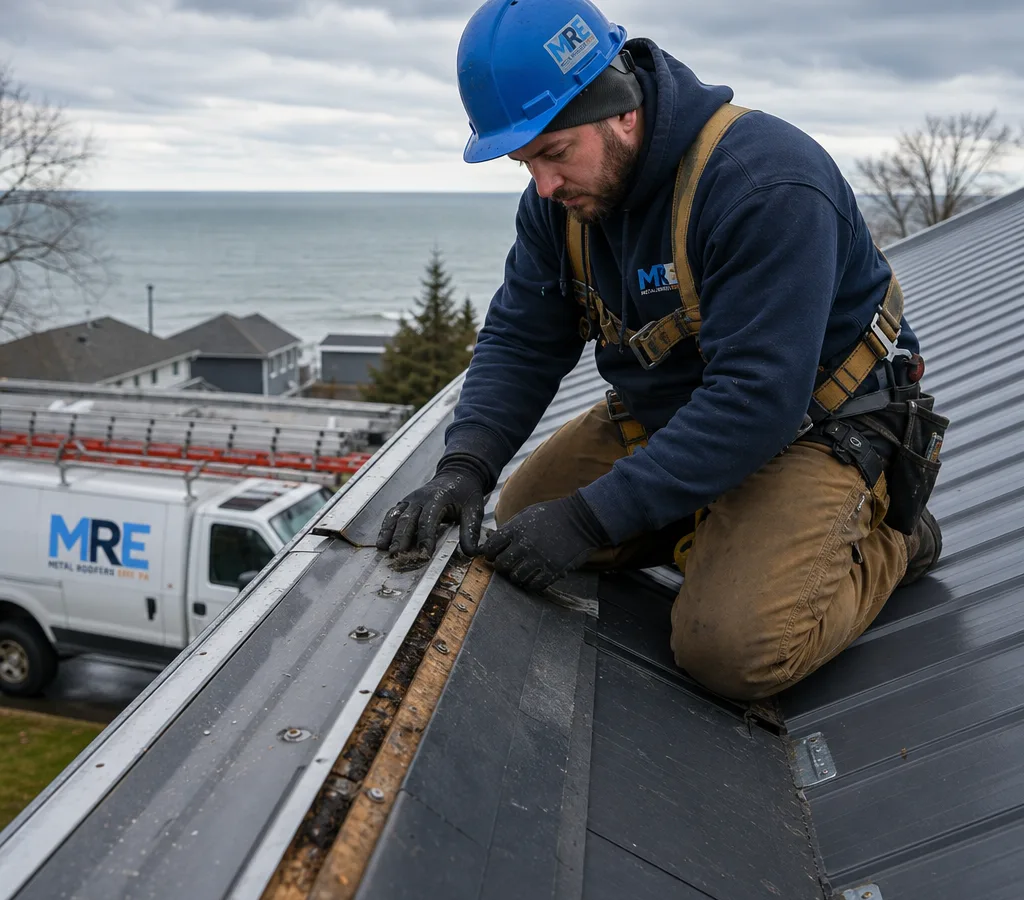
Searching for erie pa roof repair usually means something is already wrong: a ceiling stain, wind-lifted material, a drip near a vent pipe, or shingles in the yard after a squall. Repairs are often time-sensitive because water follows decking seams and rafters, and a small entry point can soak insulation and drywall before you ever see it.
Metal Roofers Erie PA handles roof repair in Erie with a practical approach: find the source, document what we see, then repair the roof in a way that works with the existing system. If a repair is the right move, we keep it focused. If the roof has multiple failure points, we explain what’s driving it and what your realistic options are before any work starts.
Erie’s lakeshore weather puts extra stress on roofs. Freeze-thaw cycles can open tiny gaps around penetrations and flashing. Wind-driven rain can push water uphill under laps and edges. Heavy snow loads can reveal weak decking or fastener issues. A good repair plan accounts for all of that, not just the spot where the water showed up inside.
Find the actual failure point
Roof problems rarely show up as a neat, obvious hole. These are the issues we see most often in Erie homes and small commercial buildings.
Leaks commonly trace back to flashing, pipe boots, valleys, skylight curbs, or fastener lines. We confirm the entry point and the path the water took, so the repair targets the cause.
After strong winds off the lake, roof edges and ridge areas are frequent trouble spots. We secure loose materials, replace damaged components, and check nearby sections for secondary damage.
Aging materials can crack, curl, split, or lose granules and coatings. If the surrounding field is still serviceable, selective replacement can extend the roof’s usable life.
Step flashing, counterflashing, and drip edge details matter. A quick smear of sealant is rarely a lasting fix when the metal is incorrectly lapped, corroded, or moving.
Temperature swings can work exposed fasteners loose over time. Re-fastening and targeted replacement with proper gasketed fasteners can stop chronic seepage at screw lines.
Some “roof leaks” are actually condensation from poor attic ventilation or bath fan exhaust issues. We call that out when we see it so you don’t pay for the wrong fix.
Focused repairs, complete details
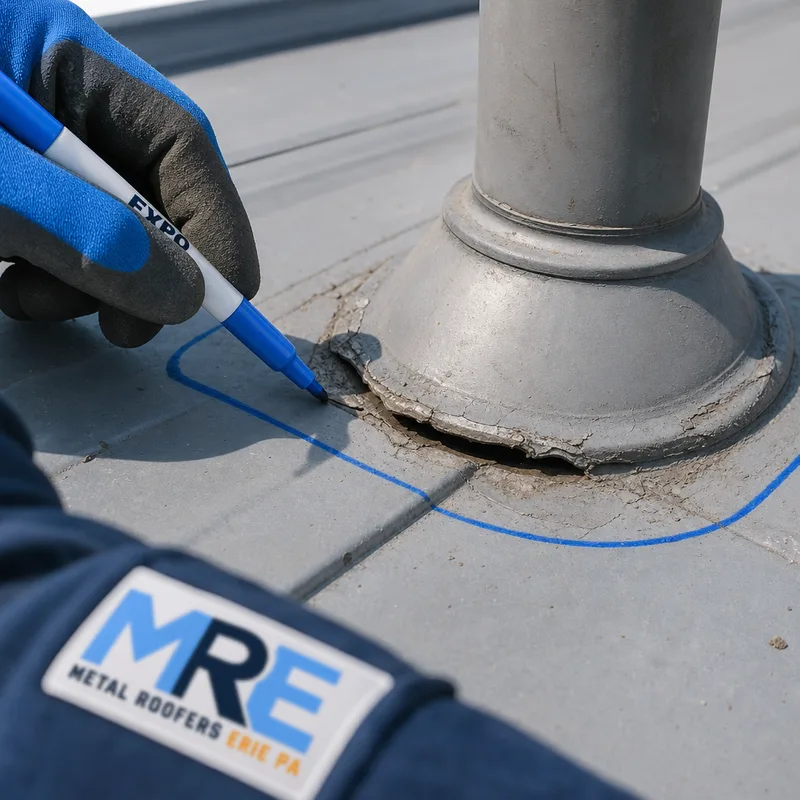
We start by locating the entry point and checking adjacent details. Replacing a visible damaged spot without tracing the water path is how leaks come back.
Roofs move with temperature changes. Proper fastening, laps, and flashing details matter more than thick layers of sealant.
Shingle, metal, and low-slope roofs all repair differently. We choose methods and materials that integrate cleanly with what’s already installed.
You should know what’s being fixed and why. For many repairs, photos make it easier to approve the right work.
Even small repairs create debris. We work carefully around property edges and leave the area clean when we’re done.
From first call to final check
You tell us what you’re seeing—an interior stain, active drip, missing material, or recent storm. If water is actively coming in, we prioritize a fast visit and discuss temporary protection if needed.
We inspect the suspected area plus the details around it: penetrations, edges, transitions, and spots where water can travel. When safe and appropriate, we verify attic or top-floor conditions to help confirm the leak path.
You get a plain-language explanation of what failed, what we recommend, and what alternatives make sense. Some situations have a straightforward fix; others have good and better options based on roof age and condition.
We complete the repair with attention to fastening, flashing, and watertight detailing. Before wrapping up, we re-check the surrounding area so the repair doesn’t end at the first visible symptom.
Repair budget and scope
Roof repair in Erie typically ranges from $250 to $1,200 for many common fixes, depending on roof type, access, and how far the damage extends. Small, targeted repairs—like a flashing touch-up or replacing a few damaged components—often land around $250 to $600, while more involved leak tracing, multiple repair points, or sections of material replacement can run $700 to $2,500+.
Your final price depends on pitch and height, how safely we can access the area, material matching, decking condition, number of penetrations involved, and whether moisture damage has spread below the surface. Exact costs are confirmed after an on-roof inspection and a written scope.
Problem areas and finished details
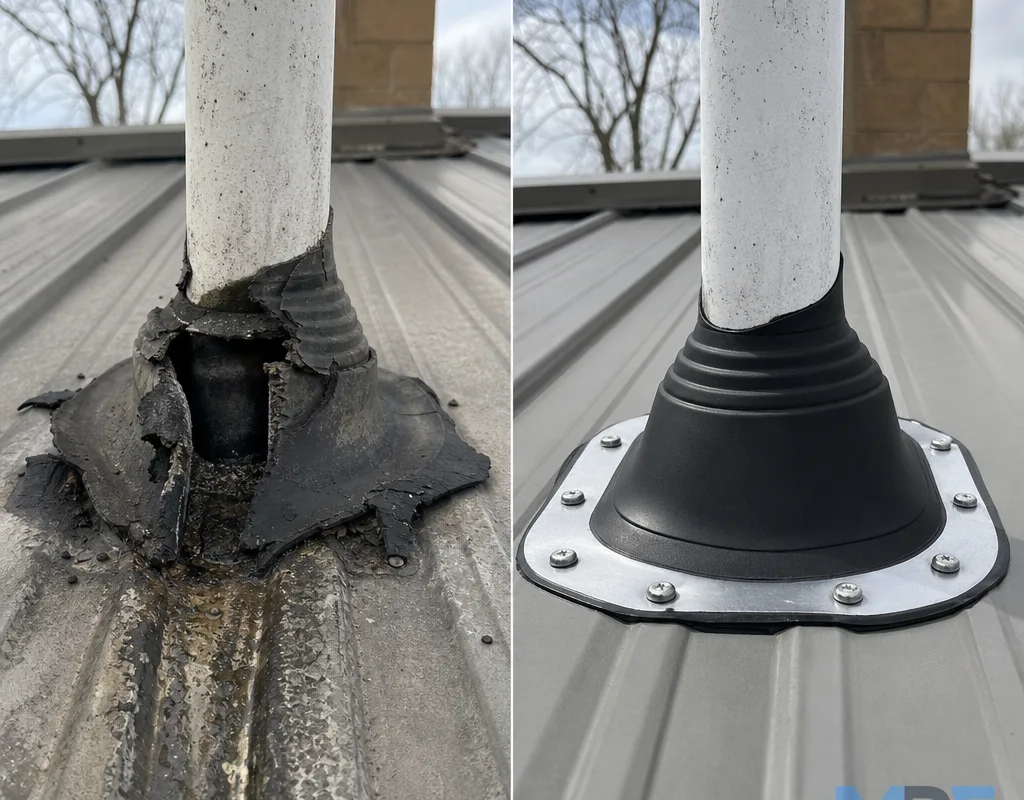
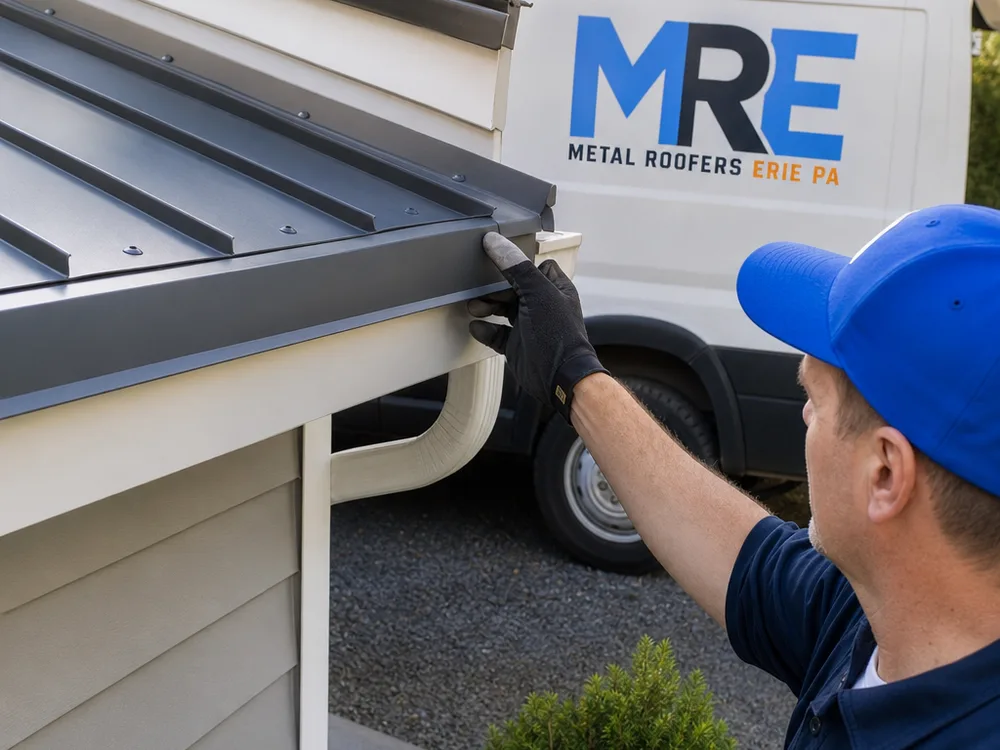
From failed penetrations to sidewall flashing and damaged eaves, the repair should integrate cleanly with the existing roof instead of looking like exposed patchwork.
Straight answers before repair day
For active leaks, we prioritize getting eyes on the roof as soon as scheduling and weather allow, because water damage spreads quickly once insulation and decking get wet. If conditions are unsafe for immediate on-roof work—high winds, lightning, or ice—we’ll discuss temporary protection steps and schedule the earliest safe repair window.
Yes, screw-line and seam leaks can often be repaired by addressing the real failure point: fastener back-out, failed seal washers, incorrect laps, or aged sealant at transitions. A lasting repair usually involves targeted re-fastening or fastener replacement and proper detailing, not just coating everything with caulk.
Yes. We can document visible storm damage with notes and photos and provide a written scope that helps you communicate clearly with your adjuster. Coverage depends on your policy and what the inspection confirms, but good documentation makes the process smoother.
A patch can be reliable when it’s used as part of the correct repair method for the roof type and the failure point is understood. Sealant alone is rarely a long-term solution for flashing mistakes, movement-related gaps, or fastener issues, especially with Erie’s temperature swings and wind-driven rain.
We trace leaks by inspecting common entry points first—penetrations, flashing, valleys, and edges—and then following the most likely water paths across decking seams and framing. In many homes, water travels before it shows indoors, so the inspection covers more than the ceiling-stain location.
If water is coming in, protect belongings, catch drips with a bucket, and relieve ceiling bulges carefully to prevent a larger collapse—only if it’s safe. Avoid climbing onto the roof, especially in wet, icy, or windy Erie conditions. During scheduling, share photos of the interior stain and any exterior damage you can safely capture from the ground.
Start with a roof repair inspection and a written scope so you can decide with real information instead of guesses.
Book InspectionStart with an on-site inspection
Tell us what you’re seeing and when it started. We’ll inspect the roof, explain what failed in plain language, and give you repair options with clear pricing and a defined scope.